If you are looking for a Boston neighborhood where multi-family investing can still make sense on both rent demand and resale flexibility, Mattapan deserves a closer look. You are not just buying a building here. You are buying into a neighborhood with a meaningful renter base, a strong owner-occupant presence, and an evolving planning landscape that can shape long-term value. This guide will help you think through rents, pricing, expenses, and the practical risks that matter before you make an offer. Let’s dive in.
Why Mattapan Stands Out
Mattapan is not a one-note rental market. According to the Boston Planning Department’s 2025 neighborhood profile, the neighborhood has 9,863 total housing units and 9,173 occupied units, with a near-even split between owner-occupied homes at 46.7% and renter-occupied homes at 49.5%.
That balance matters if you are buying a 2- to 4-unit property. It suggests you may be operating in a market with steady tenant demand while still having future appeal to owner-occupants, especially if the property fits the classic Boston small multi-family format.
Mattapan Housing Stock
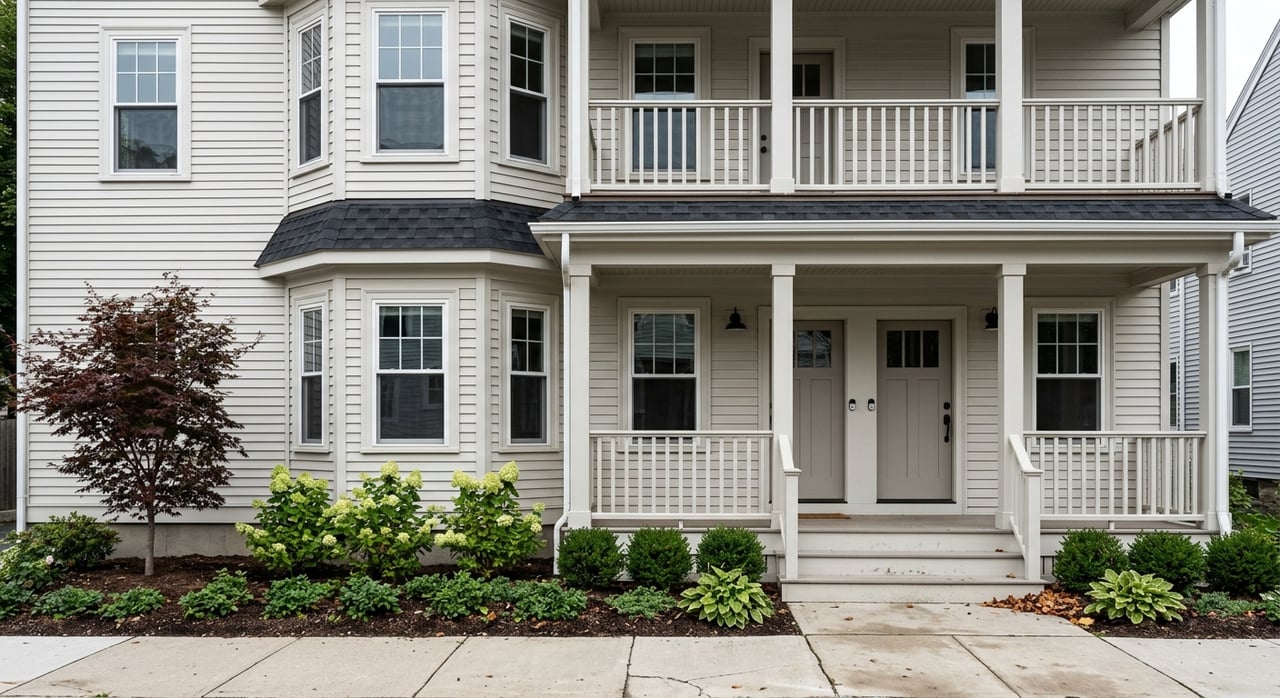
Mattapan’s housing stock includes small apartment buildings, single-family homes, public housing, and many traditional Boston triple-deckers, according to Boston Planning’s neighborhood overview. A separate zoning memo also notes that the three-decker is typical in the area.
For you as an investor, that usually means many opportunities will be older wood-frame buildings. In practical terms, purchase price is only part of the story. Long-term maintenance, code compliance, and capital planning can have just as much impact on your returns.
Planning Changes Worth Watching
Mattapan is also in an active planning environment. PLAN: Mattapan, adopted in 2023, recommends mobility improvements, mixed-use zoning, backyard ADUs, and investment in Mattapan Square.
Boston has also stated that residential zoning in Mattapan was amended to allow by-right ADUs, including detached ADUs, on owner-occupied residential lots. If you are thinking long term, this is important because policy changes can affect future housing supply, neighborhood improvements, and possible value-add strategies.
Rent Benchmarks for Underwriting
When you underwrite a Mattapan multi-family, start with local rent benchmarks, but treat them as a starting point rather than a final answer. Apartments.com rent trends for Mattapan report an average rent of $2,054 per month, including about $2,054 for a one-bedroom and $2,374 for a two-bedroom.
For larger units, Zillow’s 02126 rent data may be especially useful. Zillow reports an average rent of $3,000 across home types, with typical rents around $2,050 for a one-bedroom, $2,650 for a two-bedroom, $3,200 for a three-bedroom, and $4,033 for a four-bedroom.
That spread matters because many Mattapan multi-families have family-sized layouts. If a three-unit building had three similar 3-bedroom apartments renting at $3,200 each, that would imply about $9,600 in gross monthly rent, or $115,200 per year, before vacancy, taxes, insurance, repairs, and debt service.
Use Portal Data Carefully
Online rent estimates can help you frame a deal, but they are not a substitute for property-specific analysis. Zumper’s Southern Mattapan rent research places the median rent at $2,750, while also noting that some submarket estimates rely on limited rolling inventory.
For you, the takeaway is simple: portal data are directional. Before you commit to a purchase, compare the actual unit mix, condition, and lease terms to current local comps. Neighborhood averages alone can easily mislead you.
What Multi-Family Pricing Looks Like
Recent comp data show that Mattapan multi-family pricing can vary quite a bit. A Trulia page with MLS-based comparable sales lists recent sales at $865,000, $900,000, $952,527, $1,070,000, $1,100,000, $1,180,000, and $1,300,000.
That is a wide range, and it reinforces a core rule for investors: compare properties on a per-unit basis and in the context of condition, layout, and lot utility. A renovated three-family with strong systems and larger units may justify a very different number than a similar-looking building with deferred maintenance.
For broader context, Redfin’s Mattapan housing market page reported a median sale price of $670,000 in February 2026 for the neighborhood overall, with average days on market at 61. That is not a multi-family-only statistic, but it is a good reminder that local pricing can shift and that current comps matter.
Taxes and Carrying Costs
A deal that looks good on gross rent can still disappoint once real expenses show up. Boston’s FY2026 residential tax rate history shows a residential tax rate of $12.40 per $1,000 of assessed value.
Using that rate, a property assessed at $700,000 implies about $8,680 in annual property taxes before any exemption. A $1,000,000 assessment implies about $12,400 per year.
Boston also offers a residential exemption of $4,353.74 for qualifying owner-occupied principal residences in FY2026. If you are buying as a pure investor, you should not assume that benefit. If you plan to owner-occupy a 2- to 4-family, you may want to confirm how that exemption applies to your situation before final underwriting.
Compliance Can Change Your Numbers
Massachusetts landlord rules affect cash flow more than many buyers expect. According to Mass.gov guidance on security deposits and last month’s rent, a landlord may request no more than one month’s rent as a security deposit, plus last month’s rent and the cost of a new lock and key.
The Attorney General’s guide, cited in that state resource, also says the security deposit must be held in a Massachusetts bank account that earns interest, and it generally must be returned with interest within 30 days after move-out. These are not minor details. They affect move-in funds, bookkeeping, and how quickly cash is available or returned.
Lead Law Matters in Older Buildings
Lead compliance is one of the biggest practical issues to think about in Mattapan’s older housing stock. The Massachusetts Lead Law states that homes built before 1978 may contain lead and that owners who rent pre-1978 homes must notify tenants of lead risks.
The Attorney General’s landlord guidance, summarized in that same state resource, adds that if a child under 6 will live in the rental unit, the landlord must delead or bring lead hazards under interim control. The landlord and tenant must also sign and retain the required tenant lead forms.
If you are evaluating a triple-decker or older small multi-family, this is not a box to check later. It can affect renovation scope, operating reserves, and your timeline to safely rent units.
Budget Beyond Routine Repairs
Because Mattapan includes many older triple-deckers and smaller multifamily homes, your hold budget should go beyond simple maintenance. Based on the neighborhood’s housing profile and state compliance rules, roofs, porches, exterior paint, plumbing, heating systems, and lead-related work can become meaningful long-term capital items.
If you only underwrite paint, minor repairs, and vacancy, your numbers may look better on paper than they perform in real life. Conservative reserves usually create better investment decisions than optimistic assumptions.
A Smarter Way to Analyze a Deal
If you are comparing Mattapan multi-family properties, focus on stabilized net cash flow rather than headline rent. A practical way to do that is to work down from gross scheduled rent and subtract the costs that are easy to underestimate.
Here is a useful framework:
- Gross scheduled rent
- Vacancy and credit loss
- Property taxes
- Insurance
- Owner-paid utilities
- Routine repairs and maintenance
- Capital reserves
- Compliance-related costs
- Debt service
This approach lines up with the most useful small-investor lens in this market: not what a property could rent for in a perfect month, but what it may realistically produce after normal ownership costs.
What to Check Before You Buy
A strong Mattapan investment analysis should answer a few practical questions early in the process. These checks can help you avoid common underwriting mistakes.
- Compare on a per-unit basis rather than only by list price
- Review the unit mix to see whether it aligns with current local rent demand
- Confirm build year and whether the property is likely subject to lead-law work
- Check current rents against local comps instead of relying only on portal averages
- Underwrite taxes accurately and do not assume owner-occupant benefits unless you qualify
- Plan for older-building capital costs such as porches, roofs, and heating systems
In a neighborhood like Mattapan, disciplined underwriting often matters more than chasing the highest projected gross rent.
Is Mattapan a Good Fit for You?
Mattapan can make sense if you want a Boston neighborhood with established multi-family housing, meaningful renter demand, and the possibility of long-term upside tied to planning and zoning changes. It may be especially worth a look if you are considering a 2- to 4-unit property where you value both income potential and future resale flexibility.
The key is to stay grounded in the actual building you are buying. In Mattapan, success usually comes from matching realistic rents to realistic expenses, then leaving room for the surprises that older properties can bring.
If you are weighing a Mattapan multi-family purchase and want a more data-driven view of rents, comps, and hold costs, Jonathan Heelen can help you evaluate the numbers and build a smarter acquisition plan.
FAQs
What rent should you expect for a Mattapan multi-family unit?
- Local benchmarks vary by unit size and source, but Zillow’s 02126 data shows about $2,050 for a 1-bedroom, $2,650 for a 2-bedroom, $3,200 for a 3-bedroom, and $4,033 for a 4-bedroom, while portal data should always be verified against property-specific comps.
What makes Mattapan multi-family properties different from other Boston investments?
- Mattapan has a near-even mix of owner-occupied and renter-occupied housing, plus a housing stock that includes many triple-deckers and small multifamily buildings, which can support rental demand while also requiring careful planning for maintenance and compliance.
What property taxes should you budget for a Mattapan investment property?
- Boston’s FY2026 residential tax rate is $12.40 per $1,000 of assessed value, so a $700,000 assessment implies about $8,680 annually and a $1,000,000 assessment implies about $12,400 before any qualifying exemption.
What lead law issues should you review before buying in Mattapan?
- If the property was built before 1978, you should review potential lead risk, tenant notification requirements, and whether deleading or interim control may be required if a child under 6 will live in a rental unit.
What is the best way to analyze a Mattapan multi-family deal?
- Start with gross scheduled rent, then subtract vacancy, taxes, insurance, utilities, repairs, capital reserves, compliance costs, and debt service so you can judge the property on stabilized net cash flow rather than optimistic gross income alone.